Author: Mustashar Team

  • Best Practices to Improve Soil Water Retention in Sandy Soils

    Best Practices to Improve Soil Water Retention in Sandy Soils

    Sandy soils are common in many agricultural regions, especially in arid and semi-arid climates. While sandy soil offers good drainage and aeration, it struggles with one major challenge: poor water retention. Water drains too quickly, nutrients leach away, and crops experience frequent moisture stress.

    If you’re searching for the best practices to improve soil water retention in sandy soils, this comprehensive guide will walk you through proven, practical, and sustainable methods to retain moisture, improve soil structure, and boost crop productivity.


    Why Sandy Soils Lose Water So Quickly

    Understanding the nature of sandy soil is the first step toward improving it. Sandy soils are made up of large particles with wide pore spaces, which allow water to drain rapidly.

    Key characteristics of sandy soil include:

    • Large particle size
    • Low organic matter
    • Poor nutrient-holding capacity
    • Fast drainage and evaporation

    Without proper management, sandy soils require frequent irrigation and fertilizer application, increasing costs and reducing efficiency.


    Water Retention Practices Comparison Table

    Water Retention Practice: How w It Works Effectiveness in Sandy Soils Additional Benefits
    Adding Organic Matter (Compost/Manure) Improves soil structure and increases moisture-holding capacity Very High Boosts nutrients and microbial activity
    Mulching Reduces evaporation and soil temperature High Suppresses weeds and adds organic matter over time
    Cover Crops / Green Manure Improves soil aggregation and root channels High Fixes nitrogen and prevents erosion
    Biochar Application Stores water in micro-pores and improves nutrient retention Medium to High Long-term soil carbon storage
    Reduced Tillage Preserves soil structure and microbial life Medium Reduces erosion and improves soil health
    Clay or Soil Conditioners Fills large pore spaces and slows water movement Medium Improves nutrient retention
    Drip Irrigation Delivers water slowly and directly to roots Very High Reduces water waste and improves efficiency
    Windbreaks & Shade Crops Reduces evaporation caused by wind and heat Medium Protects crops and the soil surface


    1. Increase Organic Matter Content

    The most effective way to improve water retention in sandy soils is by increasing organic matter. Organic materials act like a sponge, holding moisture and releasing it slowly to plant roots.

    Best Organic Matter Sources

    • Compost
    • Well-rotted animal manure
    • Crop residues
    • Green manure and cover crops

    Regular organic matter additions improve soil aggregation, moisture retention, and nutrient availability.


    2. Apply Compost Regularly

    Compost is one of the best soil amendments for sandy soils. It improves both water retention and soil fertility.

    Benefits of Compost in Sandy Soils

    • Increases moisture-holding capacity
    • Reduces nutrient leaching
    • Encourages beneficial microbial activity
    • Improves root development

    Apply compost as a soil mix before planting or as a surface layer around growing crops.


    3. Use Mulching to Reduce Water Loss

    Mulching is a simple but highly effective technique to reduce evaporation from sandy soils.

    Best Mulch Materials

    • Straw or hay
    • Dry leaves
    • Wood chips or bark
    • Grass clippings

    Organic mulch protects soil from heat, reduces evaporation, and slowly adds organic matter as it decomposes.


    4. Grow Cover Crops and Green Manure

    Cover crops help sandy soils retain moisture by improving soil structure and increasing organic matter.

    Recommended Cover Crops

    • Legumes (fix nitrogen and improve soil)
    • Millet and sorghum
    • Alfalfa
    • Oats or rye

    When incorporated into the soil, these crops act as green manure, enhancing water retention naturally.


    5. Reduce Tillage and Soil Disturbance

    Frequent tillage breaks soil aggregates and accelerates moisture loss.

    Benefits of Reduced Tillage

    • Preserves soil structure
    • Improves water infiltration
    • Reduces evaporation
    • Supports soil microorganisms

    Low-till or no-till practices help sandy soils retain moisture more effectively.


    6. Improve Soil with Biochar

    Biochar is a carbon-rich material that improves water-holding capacity and nutrient retention in sandy soils.

    Why Biochar Works

    • Holds water in micro-pores
    • Reduces nutrient leaching
    • Enhances microbial habitat

    Biochar works best when mixed with compost before application.


    7. Optimize Irrigation Practices

    Efficient irrigation is essential for sandy soils, which lose water rapidly.

    Best Irrigation Techniques

    • Drip irrigation for slow, deep watering
    • Frequent but smaller irrigation cycles
    • Early morning or evening watering

    Smart irrigation reduces water waste and improves moisture availability to roots.


    8. Improve Soil Structure with Clay or Soil Amendments

    In some cases, adding small amounts of clay-rich soil or natural soil conditioners can help sandy soils retain moisture.

    These amendments fill pore spaces and slow water movement, improving moisture retention.


    9. Use Proper Fertilizer Management

    Water retention and nutrient management go hand in hand in sandy soils.

    Best Fertilizer Practices

    • Use slow-release fertilizers
    • Split fertilizer applications
    • Combine fertilizers with organic matter

    This reduces nutrient leaching and improves water-use efficiency.


    10. Protect Soil from Heat and Wind

    High temperatures and strong winds increase evaporation in sandy soils.

    Protective Measures

    • Mulching
    • Windbreaks and shelterbelts
    • Shade crops or cover plants

    Reducing environmental stress helps retain soil moisture longer.


    Common Mistakes to Avoid

    • Over-irrigating sandy soils
    • Ignoring organic matter additions
    • Frequent deep tillage
    • Using fast-release fertilizers only

    Avoiding these mistakes improves water retention and crop health.


    Final Thoughts: Turn Sandy Soil into Productive Soil

    While sandy soils naturally struggle with water retention, they can be transformed into productive, moisture-efficient soils with the right management practices.

    By focusing on organic matter, mulching, smart irrigation, and soil structure improvement, farmers can significantly enhance soil water retention in sandy soils.

    Healthy soil that holds water well leads to healthier crops, better yields, and long-term sustainability.

  • How to Choose the Right Fertilizer for Different Crops (A Complete Farmer’s Guide)

    How to Choose the Right Fertilizer for Different Crops (A Complete Farmer’s Guide)

    Choosing the right fertilizer is one of the most important decisions a farmer or gardener can make. The correct fertilizer improves plant growth, boosts yield, enhances crop quality, and protects long-term soil health. On the other hand, the wrong fertilizer can waste money, damage crops, and reduce soil fertility.

    If you’re wondering how to choose the right fertilizer for different crops, this guide will walk you through everything you need to know from understanding crop nutrient needs to selecting fertilizers based on soil type, climate, and growth stage.


    Why Choosing the Right Fertilizer Matters

    Every crop has unique nutritional requirements. Applying a single fertilizer for all crops often leads to nutrient imbalance and poor performance.

    Choosing the correct fertilizer helps:

    • Improve crop yield and quality
    • Ensure efficient nutrient uptake
    • Prevent nutrient deficiencies and toxicities
    • Maintain healthy soil structure
    • Reduce unnecessary fertilizer costs

    Smart fertilizer selection is the foundation of sustainable and profitable farming.


    Start with Soil Testing Before Choosing Fertilizer

    The first step in choosing the right fertilizer is understanding your soil. Soil testing reveals nutrient levels, pH, salinity, and organic matter content.

    Why Soil Testing Is Essential

    • Identifies nutrient deficiencies
    • Prevents over-fertilization
    • Improves fertilizer efficiency
    • Protects soil health

    Without soil testing, fertilizer selection becomes guesswork rather than precision management.


    Understanding NPK: The Core of Fertilizer Selection

    Most fertilizers are labeled with three numbers known as the NPK ratio.

    • N (Nitrogen): Promotes leafy growth and green color
    • P (Phosphorus): Supports root development and flowering
    • K (Potassium): Improves plant strength, fruit quality, and stress resistance

    Different crops and growth stages require different NPK ratios, making this information critical when choosing fertilizer.


    How to Choose Fertilizer for Different Crop Types

    1. Fertilizer for Leafy Vegetables

    Leafy vegetables such as lettuce, spinach, cabbage, and herbs require higher nitrogen for healthy leaf development.

    • Recommended: High-nitrogen fertilizers
    • Example ratios: 20-10-10, 30-10-10
    • Organic options: Compost, well-rotted manure

    Avoid excessive nitrogen late in the season, as it may reduce flavor and shelf life.


    2. Fertilizer for Root Crops

    Root crops like carrots, potatoes, onions, and beets need strong root development rather than excessive foliage.

    • Recommended: Moderate nitrogen, higher phosphorus
    • Example ratios: 10-20-10, 5-15-15

    Too much nitrogen can result in large leaves but poor root formation.


    3. Fertilizer for Fruiting Crops

    Fruiting crops such as tomatoes, peppers, cucumbers, and eggplants require balanced nutrition with extra potassium.

    • Recommended: Balanced or high-potassium fertilizers
    • Example ratios: 10-10-20, 15-15-30

    Potassium improves fruit size, color, taste, and disease resistance.


    4. Fertilizer for Fruit Trees

    Fruit trees have long-term nutrient requirements and benefit from slow-release fertilizers.

    • Recommended: Balanced NPK with micronutrients
    • Organic options: Compost, manure, bio-fertilizers

    Over-fertilizing fruit trees can cause excessive vegetative growth and reduced fruiting.


    5. Fertilizer for Cereals and Grains

    Crops like wheat, rice, maize, and barley require nitrogen during early growth and balanced nutrients later.

    • Recommended: Split nitrogen applications
    • Example ratios: 20-20-20 during early stages

    Timing fertilizer application is just as important as choosing the right product.


    Consider Crop Growth Stage When Selecting Fertilizer

    Crop nutrient requirements change as plants grow.

    • Early growth: Higher nitrogen and phosphorus
    • Flowering stage: Balanced nutrients
    • Fruiting stage: Higher potassium

    Using stage-specific fertilizers improves nutrient use efficiency and yield.


    Organic vs Chemical Fertilizers: Which Should You Choose?

    Chemical Fertilizers

    • Fast nutrient availability
    • Precise nutrient control
    • Quick visible results

    Organic Fertilizers

    • Improve soil structure
    • Enhance microbial activity
    • Release nutrients slowly

    The best approach is often a combination of both for sustainable crop nutrition.


    Importance of Micronutrients in Fertilizer Selection

    Micronutrients such as iron, zinc, manganese, boron, and copper are required in small amounts but are essential for plant metabolism.

    Common signs of micronutrient deficiency include:

    • Yellowing leaves
    • Poor flowering
    • Stunted growth

    Always check fertilizer labels for micronutrient content, especially in alkaline soils.


    Choosing Fertilizer Based on Soil Type

    Soil type affects how nutrients are retained and absorbed.

    • Sandy soils: Use slow-release fertilizers and organic matter
    • Clay soils: Avoid over-fertilization
    • Loamy soils: Balanced fertilizers work best

    Matching fertilizer to soil type improves efficiency and reduces nutrient loss.


    Common Mistakes to Avoid When Choosing Fertilizer

    • Ignoring soil test results
    • Using one fertilizer for all crops
    • Over-fertilizing for quick results
    • Ignoring crop growth stage
    • Not considering climate conditions

    Avoiding these mistakes saves money and protects crops.


    Tips for Smarter Fertilizer Selection

    • Read fertilizer labels carefully
    • Apply fertilizers at the right time
    • Use split applications where possible
    • Maintain fertilizer application records

    Smart fertilizer choices lead to healthier plants and better harvests.


    Final Thoughts: The Right Fertilizer Makes All the Difference

    Understanding how to choose the right fertilizer for different crops is essential for maximizing yield, improving crop quality, and maintaining long-term soil health.

    Rather than relying on a single product, successful farmers tailor fertilizer choices based on crop type, soil condition, and growth stage.

    When fertilizers are chosen wisely, both crops and soil thrive together.

    Frequently Asked Questions (FAQs)

    How do I choose the right fertilizer for my crop?

    To choose the right fertilizer for your crop, start with a soil test to understand nutrient deficiencies. Then match the fertilizer’s NPK ratio to the crop type, growth stage, and soil condition. Leafy crops need more nitrogen, root crops need phosphorus, and fruiting crops benefit from higher potassium.

    Is soil testing necessary before applying fertilizer?

    Yes, soil testing is essential before applying fertilizer. It helps determine nutrient levels, soil pH, and organic matter content, allowing you to apply the correct type and amount of fertilizer while avoiding overuse or nutrient imbalance.

    What is the best fertilizer for vegetables?

    The best fertilizer for vegetables depends on the type of vegetable. Leafy vegetables require high-nitrogen fertilizers, root vegetables benefit from phosphorus-rich fertilizers, and fruiting vegetables perform best with balanced or potassium-rich fertilizers.

    Can I use the same fertilizer for all crops?

    No, using the same fertilizer for all crops is not recommended. Different crops have different nutrient requirements, and a single fertilizer may cause nutrient deficiency or excess, leading to reduced yield and soil health issues.

    What does NPK mean on fertilizer labels?

    NPK represents nitrogen (N), phosphorus (P), and potassium (K). These are the three primary nutrients plants need for growth. The numbers on fertilizer labels show the percentage of each nutrient present in the fertilizer.

    Are organic fertilizers better than chemical fertilizers?

    Organic fertilizers improve soil structure and microbial activity, while chemical fertilizers provide quick nutrient availability. The best approach is often a balanced combination of both to achieve sustainable crop nutrition and long-term soil health.

    When is the best time to apply fertilizer?

    The best time to apply fertilizer is during the active growth stages of crops. Early growth requires nitrogen and phosphorus, while flowering and fruiting stages benefit from potassium. Avoid fertilizing during extreme heat or heavy rainfall.

    Do crops need micronutrients?

    Yes, crops need micronutrients such as iron, zinc, boron, and manganese in small amounts. Micronutrient deficiencies can cause yellowing leaves, poor flowering, and stunted growth, even if major nutrients are sufficient.

    How can I avoid over-fertilizing my crops?

    To avoid over-fertilizing, follow soil test recommendations, use split fertilizer applications, measure fertilizer accurately, and avoid applying more fertilizer than recommended for your crop and soil type.

    Does soil type affect fertilizer choice?

    Yes, soil type plays a major role in fertilizer selection. Sandy soils require slow-release fertilizers, clay soils need careful application to prevent nutrient buildup, and loamy soils generally respond well to balanced fertilizers.

  • Common Fertilizer Mistakes Farmers Should Avoid (And How to Fix Them)

    Common Fertilizer Mistakes Farmers Should Avoid (And How to Fix Them)

    Fertilizers play a critical role in crop production, soil fertility, and farm profitability. When used correctly, they improve plant growth, boost yields, and strengthen crops against stress. However, improper fertilizer use can do more harm than good.

    In fact, many yield losses, soil problems, and unnecessary expenses are caused not by a lack of fertilizers—but by common fertilizer mistakes farmers should avoid.

    This in-depth guide explains the most frequent fertilizer mistakes, why they happen, and how to correct them using smart, sustainable practices.


    Why Fertilizer Mistakes Are So Costly

    Fertilizers are an investment. When misused, they can:

    • Reduce crop yield and quality
    • Damage soil health
    • Increase pest and disease pressure
    • Waste money on unnecessary inputs
    • Pollute water and the environment

    Avoiding fertilizer mistakes is not just about saving money it’s about building long term soil fertility and farm sustainability.

    Fertilizer Mistakes vs Practical Solutions

    Common Fertilizer Mistake Why It Happens Practical Solution
    Applying fertilizer without soil testing Lack of awareness about soil nutrient levels Conduct regular soil tests and adjust fertilizer plans accordingly
    Using the wrong NPK ratio Not matching fertilizer to crop requirements Select fertilizers based on crop type and growth stage
    Over-fertilizing crops Assumption that more fertilizer increases yield Follow recommended application rates and split doses
    Ignoring micronutrients Focus only on major nutrients like nitrogen and phosphorus Include micronutrients based on soil and plant analysis
    Applying fertilizer at the wrong time Poor understanding of crop nutrient uptake timing Apply fertilizer during active growth stages and cooler hours
    Uneven fertilizer application Improper or uncalibrated equipment Use calibrated tools for uniform nutrient distribution
    Relying only on chemical fertilizers Quick-results mindset Combine chemical fertilizers with organic matter and bio-fertilizers
    Ignoring soil pH Lack of soil pH testing Monitor soil pH and correct it using lime or organic amendments
    Fertilizing during extreme weather Weather conditions not considered Avoid fertilization during heavy rain or extreme heat
    Not maintaining fertilizer records No tracking system in place Maintain detailed fertilizer application records for better planning


    1. Applying Fertilizer Without Soil Testing

    One of the most common fertilizer mistakes is applying nutrients without knowing what the soil actually needs.

    Why This Is a Problem

    Soils naturally contain nutrients. Adding fertilizer blindly can lead to nutrient excess or imbalance, which reduces plant uptake and harms soil biology.

    How to Fix It

    • Conduct soil testing before each major growing season
    • Adjust fertilizer type and quantity based on results
    • Retest soil regularly to track improvements

    Soil testing ensures precision nutrient management and prevents overuse.


    2. Using the Wrong NPK Ratio

    Different crops require different nutrient balances. Applying the wrong NPK ratio is a major fertilization error.

    Common Examples

    • Too much nitrogen → excessive leaf growth, poor fruiting
    • Low phosphorus → weak roots and delayed maturity
    • Insufficient potassium → poor disease resistance

    Best Practice

    Match the NPK ratio to crop type, growth stage, and soil condition. Always read fertilizer labels carefully.


    3. Over-Fertilizing Crops

    Many farmers believe that more fertilizer means better yield. In reality, over-fertilization is one of the most damaging mistakes.

    Problems Caused by Over-Fertilization

    • Root burn and plant stress
    • Salt buildup in soil
    • Nutrient leaching and runoff
    • Higher pest and disease incidence

    Solution

    Always follow recommended application rates. Precision feeding produces better results than excessive feeding.


    4. Ignoring Micronutrients

    Farmers often focus only on nitrogen, phosphorus, and potassium while ignoring micronutrients.

    Why Micronutrients Matter

    Elements like iron, zinc, boron, and manganese are required in small amounts but are essential for enzyme activity and plant metabolism.

    How to Avoid This Mistake

    • Check fertilizer labels for micronutrient content
    • Use chelated micronutrients when needed
    • Base micronutrient application on soil tests

    5. Applying Fertilizer at the Wrong Time

    Timing is just as important as the type of fertilizer used.

    Common Timing Errors

    • Applying fertilizer too early
    • Applying during extreme heat
    • Fertilizing after heavy rainfall

    Correct Timing Strategy

    Apply fertilizer when crops can absorb nutrients effectively—usually during active growth stages and cooler parts of the day.


    6. Poor Fertilizer Application Methods

    Even the right fertilizer can fail if applied incorrectly.

    Common Application Mistakes

    • Uneven spreading
    • Applying fertilizer too close to roots
    • Surface application without incorporation

    Best Practices

    • Use calibrated equipment
    • Apply evenly across the field
    • Incorporate fertilizer when required

    7. Relying Only on Chemical Fertilizers

    Continuous dependence on chemical fertilizers weakens soil structure and reduces microbial activity.

    Long-Term Risks

    • Declining organic matter
    • Reduced nutrient efficiency
    • Higher fertilizer dependency

    Better Approach

    Combine chemical fertilizers with organic inputs such as compost, manure, and bio-fertilizers.


    8. Ignoring Soil pH

    Soil pH directly affects nutrient availability. Fertilizer applied to unsuitable pH conditions may remain unused.

    Common pH-Related Issues

    • Alkaline soil locking micronutrients
    • Acidic soil reducing phosphorus uptake

    Fix

    Test soil pH regularly and adjust it using lime, organic matter, or sulfur when necessary.


    9. Not Adjusting Fertilizer for Climate Conditions

    Climate plays a major role in fertilizer efficiency.

    Climate-Related Mistakes

    • Applying fertilizer during extreme heat
    • Ignoring evaporation and leaching

    In hot climates, slow-release fertilizers and organic matter improve nutrient retention.


    10. Skipping Record-Keeping

    Without proper records, it’s difficult to know what worked and what didn’t.

    What to Track

    • Fertilizer type and quantity
    • Application date
    • Crop response

    Good records support continuous improvement and cost control.


    Common Signs You’re Making Fertilizer Mistakes

    • Yellowing leaves
    • Poor flowering or fruiting
    • Uneven crop growth
    • Declining soil quality

    These signs indicate the need to reassess fertilization strategy.


    Final Thoughts: Smarter Fertilizer Use Means Better Farming

    Understanding common fertilizer mistakes farmers should avoid is essential for improving productivity, protecting soil health, and maximizing returns.

    Smart fertilization is not about using more inputs it’s about using the right nutrients, at the right time, in the right way.

    When fertilizer is used wisely, both crops and soil benefit.

  • How to Improve Soil Health Naturally (Without Harmful Chemicals)

    How to Improve Soil Health Naturally (Without Harmful Chemicals)

    Healthy soil is the backbone of successful farming and gardening. Without fertile, living soil, crops struggle to absorb nutrients, water drains too quickly, and yields decline over time. While chemical fertilizers may offer quick results, they often damage soil structure and microbial life in the long run.

    If you’re wondering how to improve soil health naturally without harmful chemicals, this guide is for you. Below, you’ll learn proven, sustainable methods to restore soil fertility, boost microbial activity, and grow stronger crops naturally.


    Why Soil Health Matters More Than Ever

    Soil is more than just dirt. Healthy soil is a living ecosystem made up of organic matter, microorganisms, minerals, water, and air. When soil health declines, plants become more dependent on external inputs like chemical fertilizers and pesticides.

    Improving soil health naturally helps:

    • Increase crop yields sustainably
    • Improve water retention and drainage
    • Reduce erosion and nutrient loss
    • Support beneficial soil organisms
    • Lower dependency on synthetic chemicals

    In hot and arid climates, natural soil improvement is especially important to prevent soil degradation.


    1. Add Organic Matter Regularly

    The fastest and most effective way to improve soil health naturally is by increasing organic matter. Organic matter feeds soil microbes and improves soil structure.

    Best Sources of Organic Matter

    • Compost
    • Well-rotted animal manure
    • Plant residues and crop waste
    • Mulch (straw, leaves, grass clippings)

    Organic matter improves nutrient availability and helps sandy soils retain moisture while loosening compacted soils.


    2. Use Compost to Restore Soil Life

    Compost is often called “black gold” for a reason. It provides balanced nutrients while introducing beneficial microorganisms that naturally improve soil fertility.

    Benefits of Compost

    • Improves soil structure
    • Enhances microbial diversity
    • Releases nutrients slowly
    • Reduces soil-borne diseases

    Apply compost before planting or as a top dressing around crops for continuous soil improvement.


    3. Practice Crop Rotation

    Growing the same crop repeatedly in the same soil depletes specific nutrients and increases pest pressure. Crop rotation naturally balances nutrient use and improves soil health.

    How Crop Rotation Helps Soil

    • Prevents nutrient depletion
    • Reduces disease buildup
    • Improves soil structure
    • Encourages beneficial microbes

    Rotating leafy crops, root crops, legumes, and fruiting plants creates a healthier soil ecosystem.


    4. Grow Cover Crops and Green Manure

    Cover crops are plants grown specifically to protect and enrich soil. They are one of the most effective ways to improve soil health without chemicals.

    Common Cover Crops

    • Legumes (add nitrogen naturally)
    • Alfalfa
    • Mustard
    • Rye or oats

    When these crops are turned into the soil, they act as green manure, increasing organic matter and nutrient content.


    5. Reduce Soil Disturbance

    Excessive tilling breaks down soil structure and harms beneficial organisms. Adopting low-till or no-till practices allows soil life to thrive.

    Benefits of Reduced Tillage

    • Protects soil microorganisms
    • Prevents erosion
    • Improves water infiltration
    • Maintains soil aggregates

    Less disturbance leads to healthier, more resilient soil over time.


    6. Mulching: A Simple but Powerful Technique

    Mulching involves covering the soil surface with organic materials. This method mimics nature and significantly improves soil conditions.

    Why Mulching Works

    • Prevents moisture loss
    • Reduces soil temperature fluctuations
    • Suppresses weeds naturally
    • Adds organic matter as it decomposes

    Organic mulch is especially useful in hot climates to protect soil from extreme heat.


    7. Encourage Beneficial Soil Microorganisms

    Healthy soil depends on bacteria, fungi, earthworms, and other organisms. These microbes convert organic matter into plant-available nutrients.

    How to Support Soil Life

    • Avoid chemical pesticides
    • Add compost and compost tea
    • Maintain soil moisture
    • Use organic fertilizers

    A biologically active soil naturally resists disease and improves nutrient cycling.


    8. Balance Soil pH Naturally

    Soil pH affects how well plants absorb nutrients. Most crops prefer slightly acidic to neutral soil.

    Natural Ways to Adjust pH

    • Use agricultural lime to raise pH
    • Add organic compost to stabilize pH
    • Apply sulfur for alkaline soils (carefully)

    Always test soil before adjusting pH to avoid overcorrection.


    9. Improve Drainage and Aeration

    Poor drainage suffocates roots and reduces microbial activity. Improving soil structure naturally enhances aeration.

    Effective methods include:

    • Adding organic matter
    • Avoiding soil compaction
    • Using raised beds where needed

    Well-aerated soil supports deeper root growth and healthier plants.


    Common Mistakes to Avoid

    • Overusing chemical fertilizers
    • Ignoring soil testing
    • Over-tilling soil
    • Expecting instant results

    Natural soil improvement is a gradual process, but the long-term benefits far outweigh quick fixes.


    Final Thoughts: Build Soil for the Future

    Learning how to improve soil health naturally is one of the most valuable investments a farmer or gardener can make. Healthy soil leads to healthier plants, better yields, and a more sustainable growing system.

    By focusing on organic matter, soil biology, and natural management practices, you can restore soil fertility without relying on harmful chemicals.

    Healthy soil today ensures productive harvests for years to come.

  • DIY Organic Fertilizer Alternatives You Can Make at Home

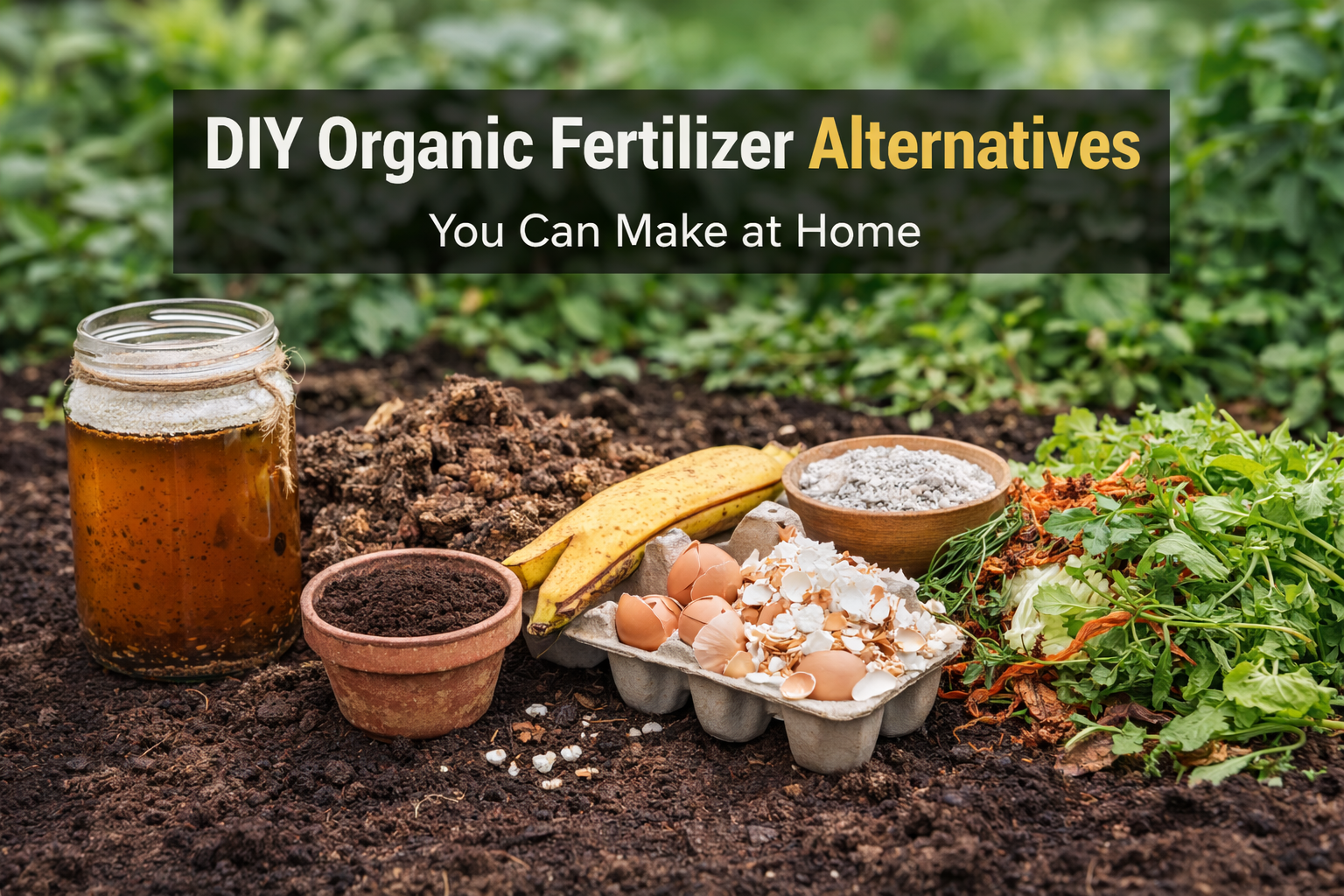
    DIY Organic Fertilizer Alternatives You Can Make at Home

    the soil is the foundation of healthy plants. While commercial fertilizers can deliver fast results, many farmers and home gardeners are now turning to DIY organic fertilizer alternatives to improve soil health naturally, reduce costs, and grow safer food.

    The good news? You don’t need expensive products or complicated tools. Many effective homemade organic fertilizers can be made using everyday household and farm waste.

    In this complete guide, you’ll learn how to make the best natural fertilizer for plants at home, when to use it, and how they support long-term soil fertility.


    Why Choose DIY Organic Fertilizers?

    Organic fertilizers feed the soil, not just the plant. Unlike chemical fertilizers that deliver nutrients quickly but temporarily, organic alternatives improve soil structure and microbial life over time.

    Key benefits of DIY organic fertilizers include:

    • Improved soil health and fertility
    • Lower cost compared to store-bought products
    • Reduced chemical exposure
    • Environmentally friendly nutrient recycling
    • Safer food production

    For hot, sandy soil conditions, organic fertilizers are especially valuable because they enhance moisture retention and improve nutrient availability.


    1. Compost: The Ultimate Organic Fertilizer

    Compost is one of the most powerful and balanced organic fertilizer alternatives you can make at home.

    What Compost Provides

    • Nitrogen for leaf growth
    • Phosphorus for roots
    • Potassium for plant health
    • Beneficial microbes for soil life

    How to Make Compost at Home

    Mix the following materials:

    • Green waste (vegetable peels, grass clippings)
    • Brown waste (dry leaves, cardboard, straw)
    • Small amount of soil or old compost

    Turn the pile every 1–2 weeks and keep it slightly moist. In 2–3 months, you’ll have nutrient-rich compost ready for use.


    2. Compost Tea: Fast-Acting Liquid Nutrition

    Compost tea is a liquid organic fertilizer that delivers nutrients quickly while promoting the growth of beneficial microorganisms.

    How to Make Compost Tea

    • Fill a bucket with water
    • Add a handful of compost
    • Let it steep for 12–24 hours
    • Stir occasionally

    Use compost tea to water plants at the base or as a foliar spray for rapid nutrient absorption.


    3. Banana Peel Fertilizer (Potassium Boost)

    Banana peels are a powerful natural source of potassium, which supports flowering, fruit development, and disease resistance.

    How to Use Banana Peels as Fertilizer

    • Chop peels and bury them near plant roots
    • Dry and grind peels into powder
    • Soak peels in water to make banana tea

    This DIY organic fertilizer works especially well for tomatoes, peppers, and flowering plants.


    4. Eggshell Fertilizer for Calcium

    Calcium deficiency is a common issue in many soils and can lead to problems like blossom end rot. Eggshells are an excellent organic calcium source.

    How to Prepare Eggshell Fertilizer

    • Rinse eggshells thoroughly
    • Dry them completely
    • Crush into a fine powder

    Mix the powder into soil or compost to strengthen plant cell walls and improve root development.


    5. Coffee Grounds: Nitrogen-Rich Soil Booster

    Used coffee grounds are a great nitrogen-rich organic fertilizer when applied correctly.

    Best Uses for Coffee Grounds

    • Mix into compost piles
    • Add small amounts directly to soil
    • Use for acid-loving plants

    Avoid overuse, as excessive coffee grounds can affect soil pH.


    6. Animal Manure (Well-Composted Only)

    Animal manure is one of the oldest and most effective organic fertilizers.

    Safe Manure Options

    • Cow manure
    • Sheep manure
    • Chicken manure (high nitrogen use carefully)

    Always compost manure before application to avoid burning plants and spreading pathogens.


    7. Green Manure and Cover Crops

    Green manure involves growing plants specifically to improve soil fertility.

    Common Green Manure Crops

    • Legumes (fix nitrogen)
    • Alfalfa
    • Mustard plants

    These plants are later turned into the soil, enriching it naturally.


    8. Wood Ash: Potassium and pH Support

    Wood ash from untreated wood provides potassium and trace minerals.

    How to Use Wood Ash Safely

    • Apply sparingly
    • Avoid use on acidic-loving plants
    • Mix thoroughly into the soil

    Wood ash is best suited for neutral to acidic soils.


    How to Choose the Right DIY Organic Fertilizer

    Not all fertilizers work the same way. Choose based on your plant’s needs:

    • Leafy growth: Compost, coffee grounds
    • Flowering & fruiting: Banana peels, wood ash
    • Root strength: Eggshells, compost

    Combining multiple organic fertilizers often delivers the best results.


    Common Mistakes to Avoid

    • Overapplying organic fertilizers
    • Using fresh manure directly
    • Ignoring soil testing
    • Expecting instant results

    Organic fertilizers work gradually but sustainably.


    Final Thoughts: Build Healthy Soil Naturally

    Using DIY organic fertilizer alternatives is one of the most effective ways to improve soil health, reduce farming costs, and grow stronger plants naturally.

    By recycling organic waste and understanding plant nutrition, you can create a self-sustaining system that benefits both crops and the environment.

    Healthy soil today means better harvests tomorrow.

  • How to Read Fertilizer Labels Like a Pro: A Complete Guide for Farmers & Gardeners

    How to Read Fertilizer Labels Like a Pro: A Complete Guide for Farmers & Gardeners

    Choosing the right fertilizer can make the difference between healthy, high-yield crops and disappointing results. Yet many farmers and gardeners struggle with one critical step: understanding fertilizer labels.

    If you’ve ever looked at a fertilizer bag and felt confused by numbers like 20-20-20 or terms such as micronutrients, slow release, or chelated minerals, you’re not alone. In this guide, you’ll learn how to read fertilizer labels like a pro, so you can make confident, informed decisions for your crops and soil.

    This article breaks everything down in simple language, no guesswork, no jargon.


    Why Understanding Fertilizer Labels Is So Important

    Fertilizer labels are not just marketing; they are legally required information that tells you exactly what nutrients you’re applying to your soil. Misreading them can lead to:

    • Over-fertilization that damages crops
    • Nutrient deficiencies that limit plant growth
    • Wasted money on unsuitable products
    • Long-term soil health problems

    When you understand fertilizer labels, you can:

    • Match nutrients to specific crops
    • Improve yield and plant health
    • Apply fertilizers safely and efficiently
    • Choose the best products for UAE soil conditions

    The NPK Ratio: The Most Important Part of a Fertilizer Label

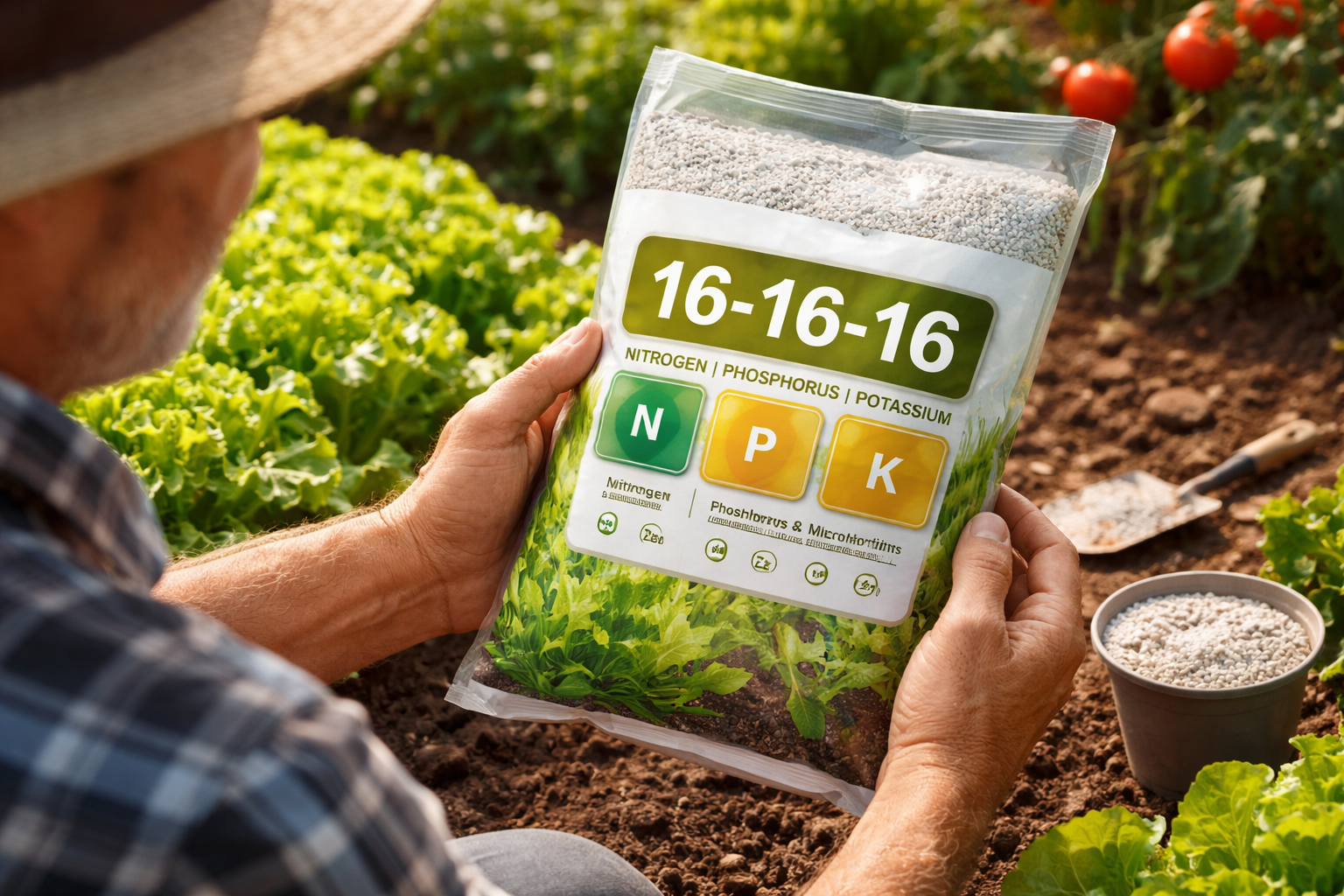
    The first thing you’ll notice on any fertilizer label is a set of three numbers, such as 10-10-10 or 15-5-30. This is known as the NPK ratio.

    What Do NPK Numbers Mean?

    • N (Nitrogen) – Supports leaf growth and green color
    • P (Phosphorus) – Encourages root development and flowering
    • K (Potassium) – Improves overall plant health, fruit quality, and stress resistance

    For example, a fertilizer labeled 20-20-20 contains:

    • 20% Nitrogen
    • 20% Phosphorus
    • 20% Potassium

    The remaining percentage consists of fillers and other beneficial ingredients.


    Choosing the Right NPK Ratio for Your Crops

    Different crops have different nutrient needs. Reading the fertilizer label allows you to choose the right balance.

    • Leafy vegetables (lettuce, spinach): Higher nitrogen
    • Root crops (carrots, potatoes): Higher phosphorus
    • Fruit-bearing plants (tomatoes, cucumbers): Higher potassium

    Using the wrong NPK ratio may result in lush leaves but poor fruiting or strong roots but weak growth.


    Understanding Secondary Nutrients on Fertilizer Labels

    Beyond NPK, professional fertilizer labels list secondary nutrients that are essential for plant health.

    Common Secondary Nutrients

    • Calcium (Ca) – Strengthens cell walls and prevents blossom end rot
    • Magnesium (Mg) – Essential for photosynthesis
    • Sulfur (S) – Supports protein formation

    In UAE soils, calcium and magnesium deficiencies are common, making this section of the label especially important.


    Micronutrients: Small Amounts, Big Impact

    Micronutrients are required in smaller quantities, but they play a critical role in plant development.

    Common Micronutrients You’ll See on Labels

    • Iron (Fe)
    • Zinc (Zn)
    • Manganese (Mn)
    • Boron (B)
    • Copper (Cu)

    Look for words like “chelated iron”—this means the nutrient is easier for plants to absorb, especially in alkaline soils common in the region.


    Organic vs Chemical Fertilizers: How Labels Differ

    Fertilizer labels also tell you whether a product is organic or synthetic.

    Organic Fertilizer Labels

    • Nutrients are released slowly
    • Improve soil structure
    • Lower nutrient percentages

    Chemical Fertilizer Labels

    • Fast nutrient availability
    • Higher NPK values
    • Precise nutrient control

    Understanding this distinction helps you choose the right product for long-term soil health versus quick results.


    Slow-Release vs Water-Soluble Fertilizers

    Most professional fertilizer labels specify how nutrients are released.

    • Slow-release fertilizers feed plants over weeks or months
    • Water-soluble fertilizers act quickly and are ideal for rapid correction

    For high temperatures and sandy soils, slow-release fertilizers help reduce nutrient loss.


    Application Instructions: Don’t Skip This Section

    Every fertilizer label includes application rates and methods. Ignoring this section can damage crops.

    Look for:

    • Recommended dosage per plant or per area
    • Application frequency
    • Safety precautions

    More fertilizer does not mean better results. Precision is key.


    How to Match Fertilizer Labels with Soil Test Results

    The best way to use fertilizer labels like a professional is to combine them with soil testing.

    If your soil test shows low potassium, choose a fertilizer with a higher K value. If nitrogen is already high, avoid nitrogen-heavy products.

    This approach saves money and protects soil health.


    Common Mistakes People Make When Reading Fertilizer Labels

    • Choosing fertilizer based on brand instead of nutrients
    • Ignoring micronutrients
    • Over-applying high-N fertilizers
    • Not considering soil type and climate

    A professional approach always starts with the label, not the marketing.


    Final Thoughts: Become a Smarter Fertilizer Buyer

    Learning how to read fertilizer labels empowers you to make smarter decisions for your crops, garden, and soil. With the right knowledge, you can improve yields, reduce waste, and maintain long-term soil fertility.

    Whether you’re managing a farm or maintaining a home garden, understanding fertilizer labels is one of the most valuable skills you can develop.