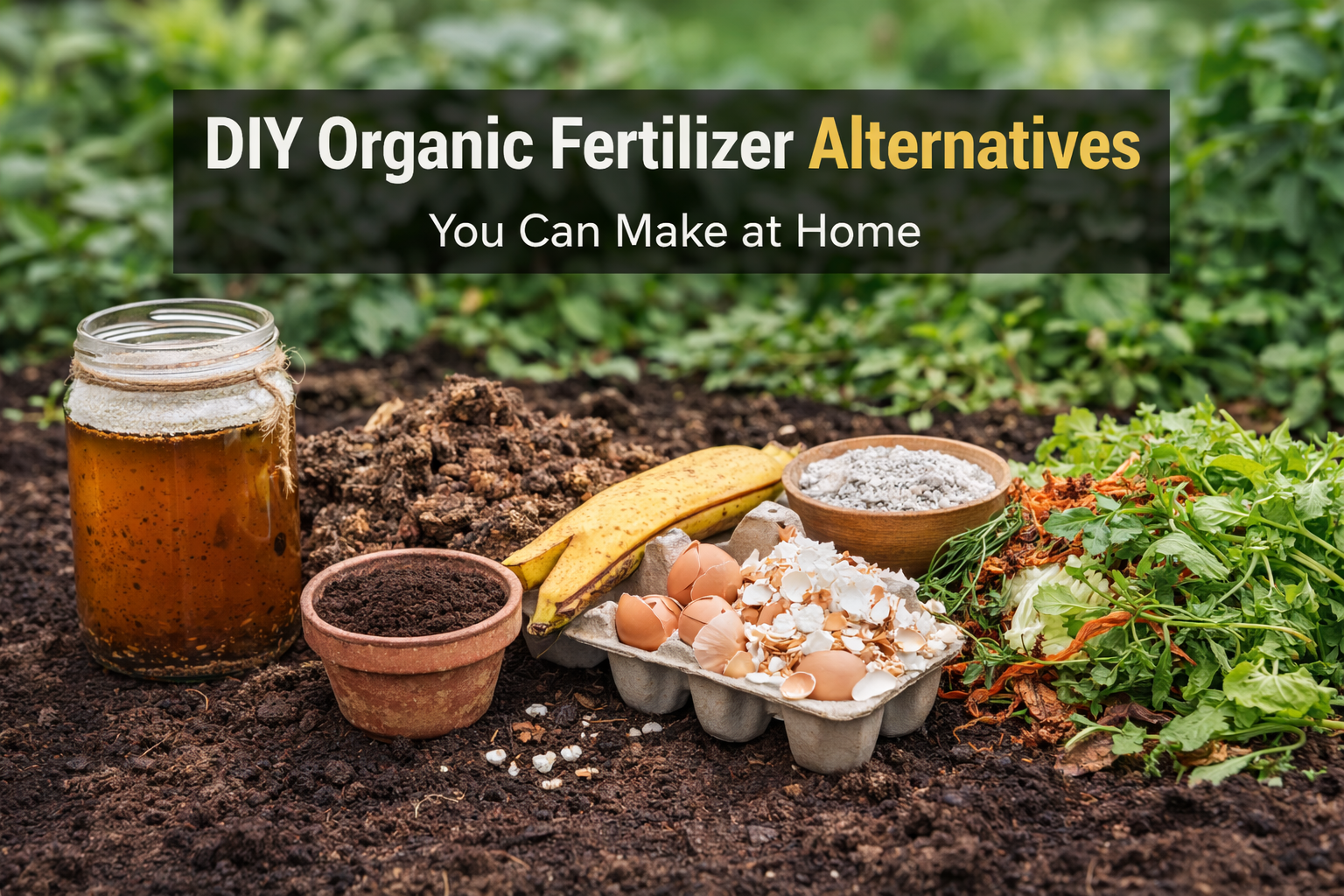
the soil is the foundation of healthy plants. While commercial fertilizers can deliver fast results, many farmers and home gardeners are now turning to DIY organic fertilizer alternatives to improve soil health naturally, reduce costs, and grow safer food.
The good news? You don’t need expensive products or complicated tools. Many effective homemade organic fertilizers can be made using everyday household and farm waste.
In this complete guide, you’ll learn how to make the best natural fertilizer for plants at home, when to use it, and how they support long-term soil fertility.
Why Choose DIY Organic Fertilizers?
Organic fertilizers feed the soil, not just the plant. Unlike chemical fertilizers that deliver nutrients quickly but temporarily, organic alternatives improve soil structure and microbial life over time.
Key benefits of DIY organic fertilizers include:
- Improved soil health and fertility
- Lower cost compared to store-bought products
- Reduced chemical exposure
- Environmentally friendly nutrient recycling
- Safer food production
For hot, sandy soil conditions, organic fertilizers are especially valuable because they enhance moisture retention and improve nutrient availability.
1. Compost: The Ultimate Organic Fertilizer
Compost is one of the most powerful and balanced organic fertilizer alternatives you can make at home.
What Compost Provides
- Nitrogen for leaf growth
- Phosphorus for roots
- Potassium for plant health
- Beneficial microbes for soil life
How to Make Compost at Home
Mix the following materials:
- Green waste (vegetable peels, grass clippings)
- Brown waste (dry leaves, cardboard, straw)
- Small amount of soil or old compost
Turn the pile every 1–2 weeks and keep it slightly moist. In 2–3 months, you’ll have nutrient-rich compost ready for use.
2. Compost Tea: Fast-Acting Liquid Nutrition
Compost tea is a liquid organic fertilizer that delivers nutrients quickly while promoting the growth of beneficial microorganisms.
How to Make Compost Tea
- Fill a bucket with water
- Add a handful of compost
- Let it steep for 12–24 hours
- Stir occasionally
Use compost tea to water plants at the base or as a foliar spray for rapid nutrient absorption.
3. Banana Peel Fertilizer (Potassium Boost)
Banana peels are a powerful natural source of potassium, which supports flowering, fruit development, and disease resistance.
How to Use Banana Peels as Fertilizer
- Chop peels and bury them near plant roots
- Dry and grind peels into powder
- Soak peels in water to make banana tea
This DIY organic fertilizer works especially well for tomatoes, peppers, and flowering plants.
4. Eggshell Fertilizer for Calcium
Calcium deficiency is a common issue in many soils and can lead to problems like blossom end rot. Eggshells are an excellent organic calcium source.
How to Prepare Eggshell Fertilizer
- Rinse eggshells thoroughly
- Dry them completely
- Crush into a fine powder
Mix the powder into soil or compost to strengthen plant cell walls and improve root development.
5. Coffee Grounds: Nitrogen-Rich Soil Booster
Used coffee grounds are a great nitrogen-rich organic fertilizer when applied correctly.
Best Uses for Coffee Grounds
- Mix into compost piles
- Add small amounts directly to soil
- Use for acid-loving plants
Avoid overuse, as excessive coffee grounds can affect soil pH.
6. Animal Manure (Well-Composted Only)
Animal manure is one of the oldest and most effective organic fertilizers.
Safe Manure Options
- Cow manure
- Sheep manure
- Chicken manure (high nitrogen use carefully)
Always compost manure before application to avoid burning plants and spreading pathogens.
7. Green Manure and Cover Crops
Green manure involves growing plants specifically to improve soil fertility.
Common Green Manure Crops
- Legumes (fix nitrogen)
- Alfalfa
- Mustard plants
These plants are later turned into the soil, enriching it naturally.
8. Wood Ash: Potassium and pH Support
Wood ash from untreated wood provides potassium and trace minerals.
How to Use Wood Ash Safely
- Apply sparingly
- Avoid use on acidic-loving plants
- Mix thoroughly into the soil
Wood ash is best suited for neutral to acidic soils.
How to Choose the Right DIY Organic Fertilizer
Not all fertilizers work the same way. Choose based on your plant’s needs:
- Leafy growth: Compost, coffee grounds
- Flowering & fruiting: Banana peels, wood ash
- Root strength: Eggshells, compost
Combining multiple organic fertilizers often delivers the best results.
Common Mistakes to Avoid
- Overapplying organic fertilizers
- Using fresh manure directly
- Ignoring soil testing
- Expecting instant results
Organic fertilizers work gradually but sustainably.
Final Thoughts: Build Healthy Soil Naturally
Using DIY organic fertilizer alternatives is one of the most effective ways to improve soil health, reduce farming costs, and grow stronger plants naturally.
By recycling organic waste and understanding plant nutrition, you can create a self-sustaining system that benefits both crops and the environment.
Healthy soil today means better harvests tomorrow.
Leave a Reply