
Category: Agriculture

  • UAE Farming: Mastering Arid Climate Solutions and Desert Agriculture

    UAE Farming: Mastering Arid Climate Solutions and Desert Agriculture

    For a time, people thought it was impossible to have a strong farming sector in the United Arab Emirates. This was because the UAE has sand dunes, extremely hot summers that can go over 50 degrees Celsius, and very little rain, with an average of less than 100mm per year. These conditions made it seem like growing food locally would not work. Things are changing fast. The UAE is now using high-tech farming to grow its food. This is not a pastime for people who like gardening; It is a key part of the country’s plans to be more secure. The UAE farming industry is really taking off. Farmers in the UAE are using technology to grow food. This helps the country rely less on imports and be more independent. The government sees farming as crucial for the UAE’s future.

    So the UAE is investing in farming. Making it a priority. This way, the country can have a food supply. It also helps to create jobs and boost the economy. The UAE wants to be a leader in high-tech farming. It is working hard to make that happen.

    In this guide, we look at the types of farming that are changing the Middle Eastern landscape. We see what is new in farming in the desert and what people are doing to deal with the climate. We find out how the UAE is making its dry land good for growing food in a way that’s good for the environment, using things that work well locally and the latest technology. The Middle Eastern landscape is being defined by these agricultural subcategories, and the UAE is making a big change.

    The Reality of Arid Farming in the UAE

    To understand how farming works in the UAE, you have to consider the challenges of the environment. Unlike places like Europe or the Americas, UAE farmers have to deal with dry conditions. The soil is sand, which means it can’t hold much water and is often salty.

    Just because it’s dry doesn’t mean it’s dead. The local environment has always been home to plants like the Ghaf tree and other shrubs that can survive with water. Modern farming in areas looks at these plants and uses their strengths to grow crops. By focusing on growing crops that don’t need water but still produce a lot, farmers in the UAE are choosing crop types that can handle the heat and don’t need much water.

    Soil Health and Salinity Management

    One of the problems in dry areas is soil salinization. When water evaporates fast in the heat, it leaves behind salt that hurts plant roots. Local experts are now using biosaline agriculture. This means growing crops that can handle salt, like some kinds of quinoa, dates, and certain types of animal food. These crops do well in water that’s a little salty.

    Desert Agriculture: Turning Sand into Gold

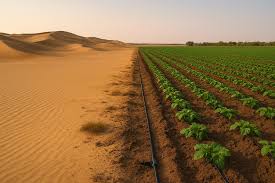
    Desert agriculture in the United Arab Emirates has changed a lot over time. It used to be about traditional palm groves. Now we have what we call Smart Farms. The idea here is not to try to change the desert. Instead, we work with what the desert has to offer. For example, we get a lot of sunlight in the desert. This is usually a problem for plants that grow outside. Now we are using this sunlight to our advantage. We use panels to get power for machines that remove salt from water and for systems that keep greenhouses cool.

    There is a technology that is really making a difference in the United Arab Emirates. This technology is called Liquid Nanoclay. A company from Norway called Desert Control made this technology. They tested it a lot in Dubai and Abu Dhabi. Liquid Nanoclay is a process. It puts a layer of clay around each grain of sand. This changes the sand into a soil that’s like a sponge. It holds onto water and nutrients. This means we do not need to use much water. We can use up to 50 percent water.



    Innovative Climate Solutions: The Rise of CEA

    As the climate changes around the world, the UAE is trying out ways to deal with it. The UAE is using itself as a test ground for climate solutions. The main part of this effort is Controlled Environment Agriculture, or CEA. Since the weather outside is often too harsh, the “environment” is moved indoors.

    1. Hydroponics and Aeroponics

    Hydroponics is a known method in the UAE. It grows plants in water that has the nutrients of soil. This helps farmers save a lot of water. Up to 90% compared to farming. Aeroponics is similar. Goes a step further. It sprays the roots of plants with nutrients. This method uses less water and helps plants grow faster.

    2. Vertical Farming: Bustanica and Beyond

    The UAE does not have land that can be used for farming. So the only way to grow more is to go up. The UAE has Bustanica, the world’s vertical farm, near Al Maktoum International Airport. These farms use LED lights to help plants grow. They make the light for plants to grow, so leafy greens, herbs, and strawberries can be grown all year round without using any pesticides.

    3. Greenhouse Cooling Technologies

    Standard greenhouses in the UAE would become ovens in July without cooling. Traditional evaporative cooling (using “fan and pad” systems) is being replaced by closed-loop systems and chilled-water circulation. These innovations ensure that the internal temperature remains a steady 22°C-25°C, even when the outside world is boiling.

    Local Best Practices: What Works on the Ground

    If you want to invest in or learn about farming in the UAE, there are some things to keep in mind for it to be successful. The International Center for Biosaline Agriculture and farming companies have figured these out over the years.

    Precision Irrigation: We do not use flood irrigation anymore. Now we use surface drip irrigation, which puts water right where the roots are. This way, we do not waste water. Every drop is used.

    Crop Selection: Farmers in the UAE are growing crops now. They are moving away from crops that need a lot of water, like alfalfa. Instead, they are growing crops that can handle conditions, like organic kale, tomatoes, and cucumbers in special greenhouses.

    Data-Driven Decisions: Farmers are using sensors to track the soil and air. These sensors tell them how much water is in the soil, how humid it is, and how much light the plants are getting. This information is sent to the farmer’s phone so they can take care of any problems before they hurt the crops.

    Regenerative Practices: Some farmers are raising animals and growing crops together. This helps create a system where everything works together. The animal waste is used to make compost, which makes the soil healthier and better for growing crops in the UAE farming system. UAE farming is getting better with these methods.

    Regional Subcategories: From Al Ain to Ras Al Khaimah

    While the UAE is a single nation, its agricultural subcategories vary by region:

    Al Ain: Known as the “Garden City,” Al Ain benefits from higher groundwater levels and a long history of Aflaj (traditional irrigation channels). It remains a hub for date palm cultivation and dairy farming.

    Abu Dhabi (Liwa & Western Region): This area is the frontline for desert agriculture research. Large-scale desert reclamation projects are common here, focusing on forestation and salt-tolerant forage.

    Ras Al Khaimah & Fujairah: These emirates have a slightly more temperate climate and hilly terrain. They are better suited for fruit trees (like citrus and mangoes) and have higher natural rainfall, making them vital for traditional open-field farming.

    The Road to 2051: UAE National Food Security Strategy

    The United Arab Emirates government has a plan: it wants to be number one in the Global Food Security Index by the year 2051. This is not something the government wants to do; it is something that really needs to happen. Now the United Arab Emirates gets about 80 to 90 percent of its food from other countries. To change this, the United Arab Emirates needs to do a lot more to grow its food.

    Some projects are supposed to help, like the Food Tech Valley in Dubai. This place is meant to bring in companies and researchers from all around the world. By creating a center for new farming ideas, the United Arab Emirates can share what it knows about growing food in the desert with other places that have similar problems, like some parts of Africa and the Mediterranean. The United Arab Emirates is good at growing food in the desert. It can help other countries that are facing the same issues.

    Conclusion: A Greener Future for the Desert

    The way farming in the UAE is changing is really amazing. People in the UAE are using desert farming. They are using new technology to deal with the weather. This is an example of how people can turn problems into new ideas. The UAE is using ideas like the Falaj systems and new ideas like vertical farms to show the world what can be done.

    As we go on, people will keep thinking about how to do things in a way that’s good for the earth. The main goal is to grow food with less water and energy. This means that people in the UAE will be able to eat food that is grown locally, no matter how hot it is outside. For people who invest money farmers and people who buy food the message is clear: the UAE farming is getting better and better. The UAE farming is just getting started. The UAE farming is really. This is only the beginning of the UAE farming.


    Frequently Asked Questions

    What are the main crops grown in the UAE?
    Dates are the primary crop, but the UAE now successfully grows tomatoes, cucumbers, leafy greens, strawberries, and even mushrooms using indoor farming techniques.

    Is UAE farming sustainable?
    Yes, modern methods like hydroponics and the use of solar energy are making UAE farming increasingly sustainable by drastically reducing water and carbon footprints.

    How does the UAE handle water scarcity for agriculture?
    The UAE uses a mix of desalinated water, treated sewage effluent (TSE) for non-edible crops, and highly efficient drip irrigation to manage its limited water resources.
     

  • Sustainable and Regenerative Agriculture: A Complete Guide to Future Farming

    Sustainable and Regenerative Agriculture: A Complete Guide to Future Farming

    Agriculture that is both sustainable and regenerative represents a significant shift in how we cultivate food and care for our land. These methods, in contrast to traditional farming methods, which frequently cause damage to the soil and ecosystems, work in conjunction with nature to restore the health of the environment while simultaneously maintaining the productivity of the land. This comprehensive guide provides information on what sustainable and regenerative agriculture is, why it is important, and how farmers can begin implementing these methods as soon as possible.

    What Is Sustainable and Regenerative Agriculture?

    Sustainable agriculture is a term used to describe the farming methods that are meant to serve the food needs of today without restricting the resources of future generations. It strikes a balance between three pillars, which include social responsibility, economic viability, and environmental stewardship.

    Regenerative agriculture builds on this concept. Instead of passively keeping the status quo, it actively rejuvenates the environment. It enhances water retention, improves biodiversity, enhances soil fertility, as well as replenishing soil organic matter. The most important distinction is that regenerative agriculture aims at restoring and healing the land to a better condition than it used to be.

    Why Sustainable and Regenerative Agriculture Matters

    Environmental Benefits

    Industrial agriculture is also a major cause of environmental degradation. Monoculture crop production destroys soil nutrients and decreases biodiversity as well as carbon emissions. Sustainable and regenerative agriculture overcome these issues by:

    Enhancing the health of the soil: Techniques such as cover cropping and minimal tillage enhance the soil organic matter, which enhances the efficiency of water and carbon.

    The minimization of the chemical input: It reduces the use of synthetic fertilizers and pesticides, and this safeguards the waterways and lessens the pollution of agriculture.

    Growing biodiversity: Different crop rotations and combined livestock systems provide better habitats for useful insects and wildlife.

    Reducing carbon footprint: Regenerative processes put carbon into the soil, reducing the effects of climate change.

    Economic Advantages

    While transitioning to sustainable farming requires initial investment, long-term economic benefits are substantial. Farmers experience reduced input costs through decreased fertilizer and pesticide purchases. Improved soil health leads to better crop yields and resilience during droughts or extreme weather. Premium markets increasingly reward sustainable and regenerative products, allowing farmers to command higher prices and access new revenue streams.

    Social and Health Impact

    Sustainable agriculture strengthens rural communities and improves public health. Reduced chemical exposure protects farm workers and nearby residents. Local food systems created through sustainable farming improve food security and strengthen community connections. Regenerative practices also support fair labor practices and equitable access to land and resources.

    Key Practices in Sustainable and Regenerative Agriculture

    Soil Health Management

    Healthy soil is the foundation of sustainable agriculture. Farmers improve soil health through:

    • Minimizing tillage: Reduced or no-till farming preserves soil structure and protects beneficial microorganisms
    • Cover cropping: Planting off-season crops prevents erosion, adds organic matter, and fixes nitrogen naturally
    • Composting and mulching: Adding organic material improves soil fertility and water-holding capacity
    • Crop rotation: Alternating different crops breaks pest cycles and balances soil nutrients naturally

    Integrated Pest Management (IPM)

    Although shifting to sustainable farming will need upfront capital, the payoffs will be high in the long-term. Farmers enjoy low costs of input due to low purchasing of fertilizers and pesticides. The health of the soil will be improved, and crops will be more productive and will be able to withstand droughts or severe weather conditions. Sustainable and regenerative products are gaining more and more popularity in premium markets, enabling farmers to earn more money and find new sources of income.

    Social and Health Impact

    Green agriculture enhances the rural areas and the health of the people. Less exposure to chemicals means protection of farm workers and the surrounding population. Sustainable food systems that are developed as a result of sustainable farming enhance community bonds and food security. Fair labor practices and fair access to land and resources are also propagated with the help of regenerative practices.

    Agroforestry and Biodiversity

    Planting trees in farms has several advantages. Agroforestry has the benefit of capturing carbon, avoiding erosion, offering shading to crops and animals, and offering habitats to useful species. Polyculture systems that intercrop with each other are a simulation of natural ecosystems and lessen the pest and disease pressure, as well as enhance soil health.

    Livestock Integration

    Regenerative grazing incorporates livestock in the farming systems to their advantage. Rotational grazing resembles the natural movement of the herds, which gives the pastures time to rest and restore soil. Livestock manure enhances the fertility of the soil, naturally bringing about soil fertility without the use of synthetic fertilizers. This combination establishes closed-loop systems in which waste is a resource.

    Implementing Sustainable and Regenerative Agriculture on Your Farm

    Step 1: Evaluate Your Current State of Affairs

    Start by assessing your soil health, water resources, pest pressure, and economic state of affairs. The soil testing offers baseline information about the extent of organic matter, the level of nutrients, and the activity of the microbes. Knowing where you begin would help determine which practices to use to offer the most benefits.

    Step 2: Be Small and Grow Progressively

    Do not set about to change your whole operation in one night. Start with small pilot projects, say 10-20 per cent of your land. This enables you to experiment, learn what it takes to work in your unique situation, and manage financial risk. Successes in these pilot regions create confidence and give information to support the implementation of sustainable practices.

    Step 3: Build Soil Health First

    Focus on soils as the base. Adopt cover cropping, less tilling, and incorporate organic matter. Healthy soil will increase the effectiveness of other practices and result in a virtuous cycle of improvement. The benefits of soil health are long-term; the changes are normally observed after 3-5 years, and the gains will be sustainable.

    Step 4: Diversify Your Crops

    Abandon monoculture, with crop rotation and polyculture in use. Diversity lowers pest pressure, diversification of risk, and increases soil health. It can also open speciality crop and organic product markets, which are high-end.

    Step 5: Connect with Resources and Community

    Become members of farm associations and non-governmental organizations practicing sustainable farming. Such communities develop knowledge-sharing, peer support, and technical help. Various areas have grants and cost-sharing schemes, which can be used to subsidize transition costs.

    Challenges and Solutions in Sustainable Agriculture

    The Transition Period

    Sustainability also requires a 2-3 year transition that can be characterized by a decrease in the yields as soil health is restored. The assistance of financial support with grants and higher prices of transitional products enables farmers to pass the storm. Ahead of schedule planning and financial reserves make the transition easy.

    Technical Barriers and Knowledge

    Farming is being sustainable and involves other skills and knowledge that are not similar to conventional agriculture. Education is offered by extension services, online resources, and farmer organizations. Experienced sustainable farmers serve as mentors in the acceleration of learning and the development of confidence.

    Market Access

    Sustainable products require proper markets for the farmers. This is direct sales to consumers via farmers’ markets and CSA programs, wholesale sales to restaurants and retailers, and certification programs (organic, regenerative, etc.), all of which offer market channels and frequently fixed prices.

    The Future of Sustainable and Regenerative Agriculture

    Agriculture is adopting practices that are more sustainable due to a number of factors such as impacts of climate change, the rising number of environmental regulations, and rising demands of consumers on environmentally friendly products. In the sustainable farming, examples of the technological developments that can enhance the profitability and productivity of the farming operation are tools of precision agriculture and soil sensors. Some large food corporations have committed to the use of sustainable products and this has led to an upsurge in investment in regenerative agriculture.

    The government is finding it easier to make policy decisions that favor sustainable agriculture through the provision of financial incentives, funds to conduct research, and through programs that offer technical support. According to these trends, it seems that sustainable and regenerative agriculture will only gain popularity in the next decades, and it will no longer be a specialty.

    Conclusion

    Not only does sustainable and regenerative agriculture produce an abundance of food, but it also improves the health of the environment and strengthens rural communities. This indicates that this type of agriculture is the future of farming. The shift requires patience and hard work, but it will have significant long-term benefits for farmers, consumers, and the environment. These benefits will be significant. Through the implementation of strategies such as crop diversity, integrated pest management, soil health management, and water conservation, farmers have the ability to establish businesses that are not only resilient and profitable but also work in harmony with nature.

    Your actions matter, regardless of whether you are a farmer who is considering making the switch or a consumer who is supporting sustainable agriculture by purchasing products associated with it. By cooperating with one another, we can establish a food system that is beneficial to the planet and the people who live on it